
Anyone who has worked patrol knows the shift starts before the first call comes in. It starts when the vehicle is checked, gear is set, mindset is right, and officers are ready for whatever the day will bring.
That’s one reason Police1 Patrol Week hit home for so many in law enforcement. The week focused on the real side of police patrol work — officer safety, readiness, leadership, awareness, and the day-to-day habits that can make a difference when things get serious.
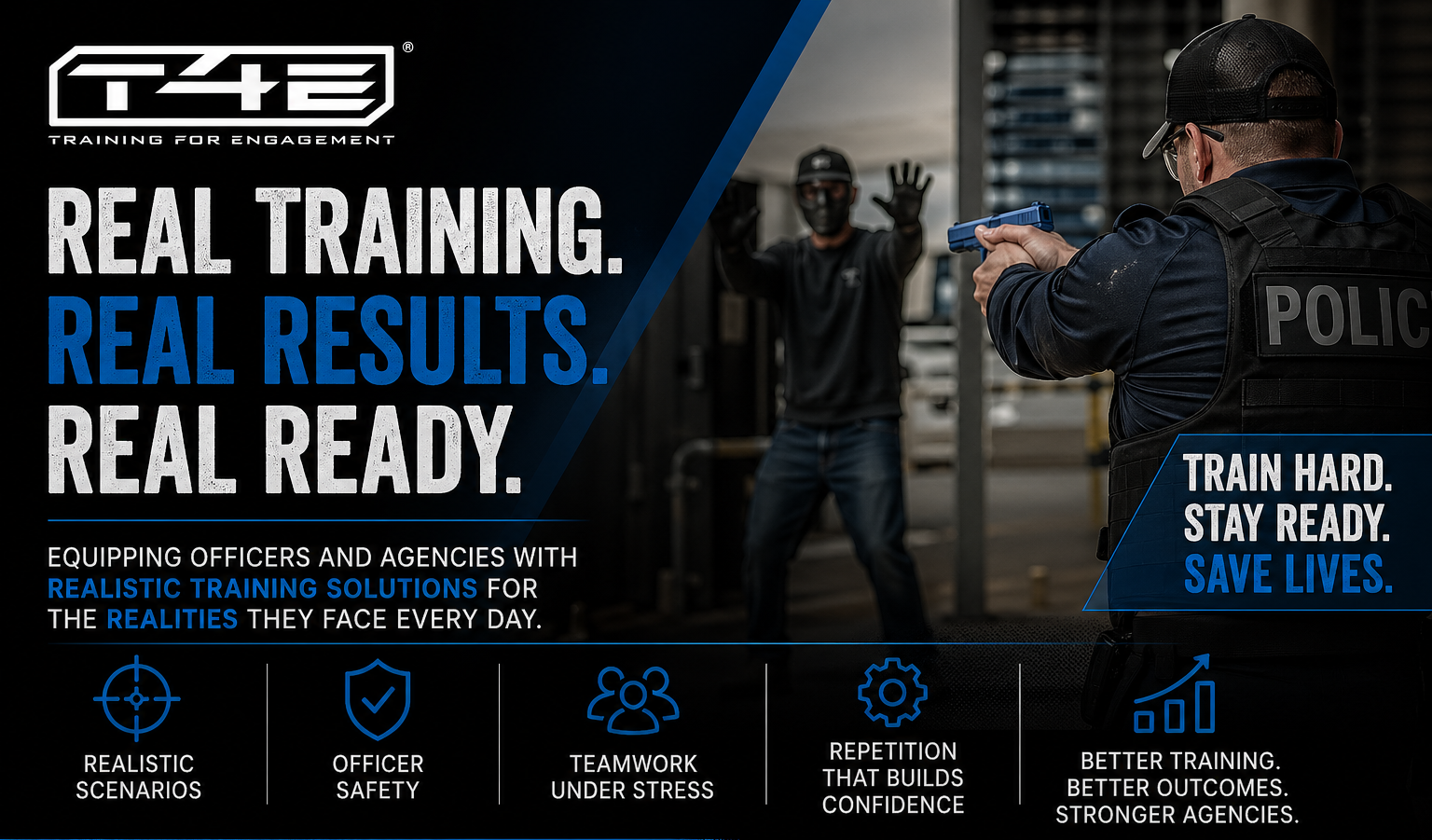
T4E believes the same mindset should carry into training for engagement.
Patrol Work Changes Fast
Patrol officers deal with constant shifts in pace. A quiet moment can turn into a high-stress situation in seconds.
One minute it’s a routine traffic stop.
Next it’s a foot pursuit.
A welfare check can become a fight.
A suspicious call can become a life-or-death decision.
That’s why police training has to go beyond the classroom and policy review.
Real Training Builds Better Reactions
You can study tactics all day, but there’s no substitute for putting people in realistic situations and letting them work through it.
Scenario-based training gives officers a chance to practice:
-
Communication under pressure
-
Decision-making in the moment
-
Movement and use of cover
-
Teamwork during confusion
-
Managing non-compliant suspects
-
Slowing situations down before they escalate
Reps matter. Confidence comes from doing the work.
Why T4E Fits Patrol Training
Many agencies want more hands-on police scenario training, but time, budgets, and access can make it difficult.
T4E gives departments another way to train with realistic force-on-force training equipment that help create useful scenarios officers can actually learn from. That means more opportunities to train, more repetitions, and better preparation for the calls they respond to every day.
The Small Things Matter
One of the biggest truths in patrol work is that small habits often have the biggest impact.
-
Good communication.
-
Strong awareness.
-
Proper positioning.Sound judgment.
-
Staying calm when others are not.
Habits should be built in training long before they’re needed on the street.
Train for Real Calls
Patrol officers don’t need perfect training environments. They need relevant ones.
-
Traffic stops training.
-
Domestic calls.
-
Building searches.
-
Unknown trouble calls.
-
Backup situations.
-
Everyday encounters that can change quickly.
Officer training should reflect the job as it really is.
Consistency is Key
Patrol work asks a lot from officers every day. The best preparation comes from consistent, realistic law enforcement training that provides clarity and a response with confidence.
If you’re looking for resources to aid in more training, less budget constraints, and reliable training equipment for every scenario, we are here to help. Contact T4E.